


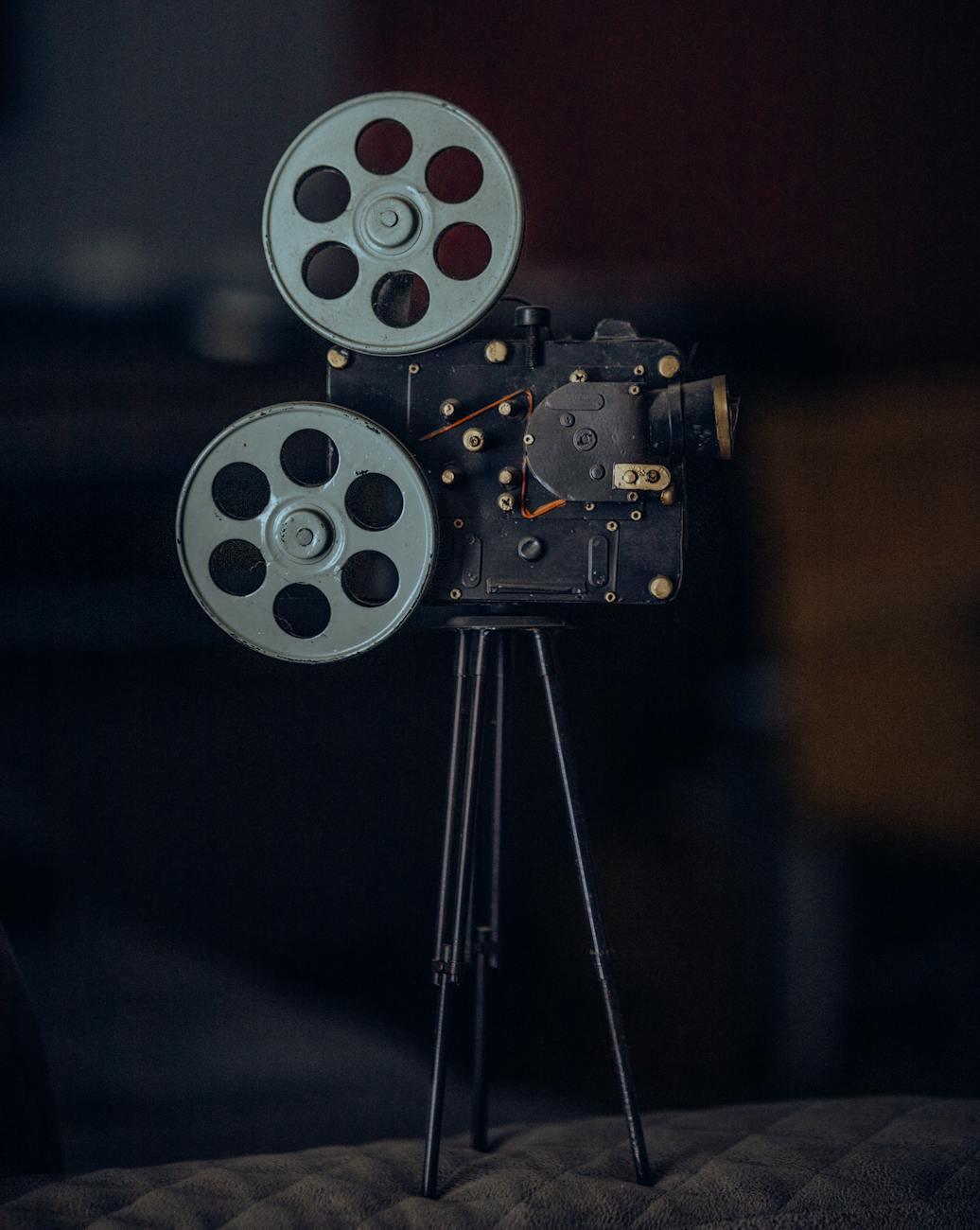
I’ve spent way too many weekends diving down the rabbit hole of movie theories. It’s a peculiar hobby, I’ll admit, but when you stumble upon a theory that just clicks, that makes you see a beloved film in a whole new light, it’s kinda mind-blowing. I mean, you think you know a movie like the back of your hand, watched it a dozen times, and then BAM! Someone points out something you completely missed that changes everything.
Take The Shining, for example. For years, I just thought it was a creepy haunted hotel movie. But then I heard the theory that Jack Torrance’s story is actually about the genocide of Native Americans. It’s wild, right? You look at details like the “all work and no play” rug pattern resembling Native American geometric designs, or the Coyo-O-Te brand on Danny’s shirt (which sounds like Coyote), and suddenly Stephen King’s original manuscript about the historical trauma of the Overlook Hotel being built on an Indian burial ground starts to feel less like authorial intent and more like the film was subtly weaving it in. It’s unsettling, but it makes sense when you connect the dots.
My absolute favorite has to be the Fight Club theory that Tyler Durden isn’t real. Okay, I know, that’s almost mainstream now, but when I first heard it, I was floored. The idea that Tyler is The Narrator’s alter ego, a manifestation of his deepest desires and frustrations in a pretty soul-crushing corporate world, just blew my mind. All those times The Narrator is with Tyler, but other people don’t seem to see him? Or when Tyler knows things The Narrator shouldn’t? It’s all about dissociative identity disorder played out on screen. This one feels so right; it elevates the movie from a quirky rant about consumerism to a profound character study.
Here’s a hard truth though: not all movie theories are created equal. Some are stretches. Some are fueled by too much caffeine and a desperate need to find hidden meaning where none exists. The biggest downside to all this theorizing is that sometimes it can actually ruin a movie for you. You start dissecting every frame, looking for clues, and you lose the simple joy of just watching the story unfold. It’s like trying to enjoy a great meal while simultaneously analyzing every single ingredient and its caloric content.
Remember Toy Story? There’s this persistent theory that Andy’s mom is Emily, the original owner of Woody. The idea is that Emily grew up, got rid of Woody, and now her son Andy inherited Woody and is now doing the same thing, abandoning his toys. It’s a surprisingly sad outlook. The visual evidence, like the “Andy” writing on the boot looking similar to “Emily”’s scribbles in the “You’ve Got a Friend in Me” scene, is pretty compelling. It makes you question the whole premise of childhood friendships and the inevitable abandonment of toys as we age.
Then there’s something like the Frozen theory that Elsa and Anna’s parents actually survived their shipwreck and ended up in Tarzan. Seriously. Apparently, the idea is that since Disney shares a loosely connected universe, the King and Queen of Arendelle washed ashore on a tropical island and raised the wild man. The evidence cited is that the shipwreck’s timeline fits, and the royal couple’s descriptions vaguely match the parents seen in Tarzan. It’s so out there, it manages to be both hilarious and, in a weird way, almost plausible given Disney’s tendency to reuse character archetypes and narrative threads across films. It’s a little frustrating how easily these fan-fiction-adjacent ideas can gain traction online, isn’t it?
I used to spend hours on forums, debating whether Neo in The Matrix was actually The Architect’s failed experiment, or if Kevin Spacey’s character in American Beauty was already dead throughout the movie. The “Kevin Spacey is dead” theory, for instance, suggests that all the events are flashbacks from his afterlife, explaining his disconnected narration and the almost dreamlike quality of certain scenes. It’s a theory that’s fun to pick apart, but ultimately, it doesn’t change the core message of the film about suburban angst and midlife crises. It’s a neat trick, but not groundbreaking.
Another one that still gets me is the Inception theory suggesting that the entire movie is Dom Cobb’s dream. The idea here is that the ending, where the spinning top wobbles, is still part of his dream state, and he never actually returns to reality. This one is particularly gnarly because it questions the very nature of reality within the film, which is already a murky subject. It’s smart, almost too smart for its own good, constantly making you doubt what you’re seeing. For $24.99 a month, you can get access to endless debates about this on certain film buff sites.
But honestly, sometimes these theories are just pure speculation, and people get way too invested. This happened with the Harry Potter theories. For instance, the idea that Professor Dumbledore was actually Death in disguise. The argument rests on Dumbledore’s seeming invincibility and his ability to “see” Harry’s death and rebirth. While it’s a clever interpretation of JK Rowling’s Allegory of the Three Brothers, it feels more like a literary analysis of the ending than a plausible in-universe explanation. The deathly hallows symbol itself is often linked to this interpretation, adding another layer of complexity. Here’s a look at how allegories work in literature, from sources like Purdue OWL.
What about the Paranormal Activity theory that Micah isn’t actually killed by Katie in the first movie, but instead, he’s possessed and becomes the demon? And that the entire franchise is him slowly becoming more powerful. It’s a terrifying thought, turning the victim into the villain. Many fans point to Micah’s increasingly strange behavior and the fact that he’s filming everything, almost as if documenting his own transformation. It’s a twist on the found-footage genre that’s both disturbing and, in its own way, quite logical within the context of the demonic possession that’s clearly at play.
The Jaws theory that you’re supposed to root 3 times like turning a key to unlock a “secret ending” is just… well, it’s silly. No such ending exists, and it never did. It’s a classic case of someone making up a “fact” and having it spread like wildfire online, often driven by people wanting to believe there’s more to a classic film than meets the eye. You can find the original screenplay details on sites like The Internet Movie Script Database (IMSDb).
One that’s always lingered is the Blade Runner theory that Rick Deckard is a Replicant. This one is almost universally accepted by now, especially after Harrison Ford himself has hinted at it. The Director’s Cut and Final Cut versions, which remove the voice-over narration and add the origami unicorn, heavily lean into this. The idea is that Deckard’s emotions are programmed, and the unicorn is a planted memory, similar to the ones given to the Replicants. It’s a brilliant piece of storytelling that interrogates what it means to be human. You can read more about the different cuts of Blade Runner on Wikipedia.
Honestly, the sheer number of theories out there for beloved films like The Matrix and Star Wars is astounding. It gives you a whole new appreciation for the artistry, and sometimes the accidental brilliance, of filmmakers. It also makes you realize how much people want to engage with stories on a deeper level, to find meaning and connection.
The Shrek theory that we only see Shrek’s perspective and he’s actually the villain is a prime example of how subjective storytelling can be. What if Lord Farquaad, a diminutive man with a clear agenda, was simply trying to run his kingdom efficiently, and Shrek, an ogre who destroys property and terrorizes the local villagers, is the real menace? It’s a fun thought experiment that challenges our preconceived notions of heroism and villainy.
You know, I sometimes wonder if the creators of these movies intentionally leave little breadcrumbs to spark these theories. Or if it’s just a happy accident of complex storytelling. It’s a debate that will likely rage on in fan communities until the end of time. It’s the digital age equivalent of arguing about whether Han shot first.
The E.T. the Extra-Terrestrial theory suggests that E.T. and Yoda from Star Wars are the same species. It’s based on their similar appearance – big ears, small stature, and wise demeanor. It’s a charming, if unlikely, idea that’s more about fan nostalgia and connecting beloved characters than any concrete textual evidence. It just goes to show the lengths people will go to tie their favorite fictional universes together.
Ultimately, movie theories, at their best, are about extending the life of a film, encouraging critical thinking, and fostering a community of passionate fans who want to delve deeper. They’re a testament to the power of a good story to spark endless interpretation and debate. But if I’m being honest, sometimes I just wish I could go back to being amazed without feeling the need to decipher every single pixel.