

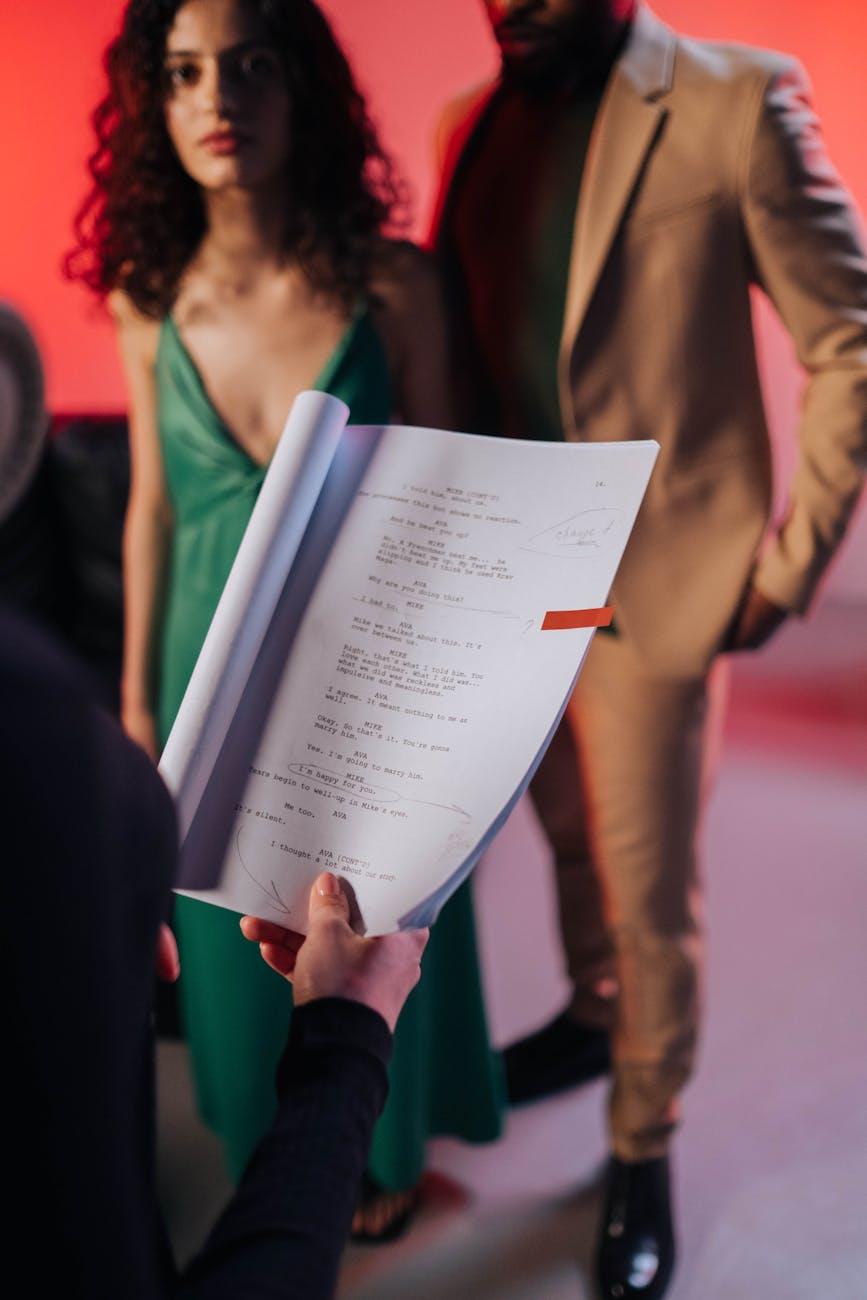
I remember reading the original script for Blade Runner years ago, and man, it was a totally different beast. Instead of the moody, philosophical sci-fi noir we got, it was pitched more like a straight-up action thriller, almost like a gritty police procedural with replicants as the bad guys. They even had this idea where Deckard was supposed to be a lot more gung-ho, less of the hesitant, morally conflicted guy he ended up being.
It’s wild to think about how many movies started out as something completely different in the script phase. Take Titanic, for instance. The initial drafts focused way more on the historical accuracy of the ship’s sinking and the class struggles aboard, almost like a period drama. The romance between Jack and Rose was there, sure, but it wasn’t the central, all-consuming focus that made the movie the cultural phenomenon it became. Imagine a Titanic without that iconic love story – I honestly wouldn’t have watched it.
Then there’s Pretty Woman, which originally had a much darker, grittier storyline. The script painted Vivian as more of a drug-addicted prostitute, and the ending was far from the fairy tale we all know and love; it was supposed to be a lot more tragic. Thankfully, thanks to some significant rewrites and Mitt Romney’s initial involvement (he was a producer!), it morphed into the rom-com darling we can’t help but watch on repeat. It just goes to show you how much story development can change everything.
I’m still shocked about how E.T. the Extra-Terrestrial almost became a horror movie! Steven Spielberg’s initial idea was apparently much scarier, with E.T. being more of a grotesque alien and the government agents being genuinely menacing. Can you even picture a terrifying E.T. trying to phone home? It boggles my mind how a simple shift in tone and visual design turned a potentially chilling experience into one of the most beloved, heartwarming films of all time, making billions at the box office. The budget for the original concept probably would have been astronomical. You can find more on early script development on sites like The Hollywood Reporter.
Another one that flipped the script, literally, is The Godfather. The original script was a fairly by-the-numbers mafia story, detailing the criminal underworld with less of the nuanced family drama and operatic feel that Francis Ford Coppola brought to it. His vision elevated it from a crime flick to a Shakespearean tragedy. Marlon Brando and Al Pacino’s performances, fueled by Coppola’s direction and a more complex screenplay, cemented its status as one of the greatest films ever made, consistently ranking high on lists from organizations like the American Film Institute.
Here’s a criticism, though: sometimes, this kind of extensive script rewriting can lead to a loss of the original, potentially more daring, artistic vision. Think about A Star Is Born; there have been so many versions, and while they’ve all been successful in their own right, you wonder if the raw, unvarnished truth of a struggling artist’s life ever gets a little too polished for mass appeal. The journey of an artist and the sacrifices they make is a tough topic to capture without losing the commercial appeal.
Honestly, the changes to Back to the Future are pretty mind-boggling. The script originally had Marty McFly as a Jewish kid named Marty Seamus Cohen, and his family was depicted as really down-on-their-luck, almost destitute. Doc Brown was also supposed to be a bit more eccentric and less of a beloved, slightly mad scientist figure. The fact that it became such a universally appealing, lighthearted adventure with Michael J. Fox is a testament to how much screenwriting can adapt and find its audience. The gross revenue from this franchise speaks volumes.
It’s hard to fathom that The Shawshank Redemption, now widely considered one of the best movies ever, was a box office flop upon its initial release. The script, adapted from a Stephen King novella, was lauded for its depth and character development, but the studio pushed for a more conventional prison break angle, which wasn’t entirely reflected in the final cut. The studio executives clearly didn’t get it either, which is surprising because they’re supposed to have a good handle on this stuff. You can learn more about its initial reception and eventual resurgence on Wikipedia.
And Pulp Fiction? The script was initially conceived as a much more straightforward crime film with fewer interconnected storylines. Quentin Tarantino’s genius lay in his ability to deconstruct and reassemble it into the nonlinear masterpiece we know, but the core idea of a group of criminals in Los Angeles was still the backbone. The dialogue, often cited as a huge part of the film’s success, was a huge gamble that paid off handsomely.
Sometimes, the opposite happens, and the movie ends up being less than the script. I’ve heard rumblings over the years about Bram Stoker’s Dracula (the Francis Ford Coppola version) where the script had even more gothic horror elements that were dialed back in the final film for pacing or special effects reasons. It’s a shame when that happens, because you’re left wondering what could have been.
The script for Edward Scissorhands was initially envisioned with a much more prominent, darker fairy tale aspect, almost like a twisted take on Pinocchio. Tim Burton brought his signature visual style, of course, but the underlying narrative evolved significantly from the initial drafts, transforming it into the beloved, melancholic fantasy we all connect with. The original concept didn’t have quite the same emotional resonance.
Thinking about Fight Club, it’s wild that the studio originally wanted a big-name action star to play Tyler Durden and envisioned a much more conventional ending where the Narrator was caught. The script underwent massive changes to allow for the subversive, twist ending and the casting of Brad Pitt and Edward Norton, who were crucial in realizing the film’s complex themes and dark humor. It’s a good thing they went with David Fincher’s vision.
The script for Forrest Gump, believe it or not, was considerably darker and more cynical in its early stages. Forrest was a lot more world-weary and observational, and the film wasn’t meant to have that same uplifting, serendipitous quality. The screenwriters actually worked with Tom Hanks to imbue the character with the innocence and earnestness that became his hallmark, making it a feel-good hit instead of a bleak commentary.
It’s frankly astounding that The Dark Knight’s script had discussions about making Harvey Dent’s transformation into Two-Face much more visually grotesque and less about the psychological duality. There were even early script ideas that leaned into a more straightforward superhero battle rather than the complex exploration of chaos and order that Christopher Nolan delivered. The box office numbers from the latter approach were obviously a much better bet.
It’s almost as if the script is just the roughest possible sketch, and the movie is the finished masterpiece, which is frankly an insult to the painstaking craft that goes into early screenwriting.